Fasteners Guide (Bolts, Nuts and Fasteners): Types, Grades and the Right Selection
What are Fasteners? Where are They Used?
Fasteners are mechanical components used to hold two or more parts together, fix them, or join them in a way that allows them to be disassembled when necessary. Products such as bolts, nuts, screws, washers, and studs play a critical role in many sectors, especially construction, machinery, automotive, energy, and heavy industry. The choice of the right fastener in industrial applications is of vital importance for system safety. An incorrectly chosen bolt can cause serious failures and costly downtime due to loosening, breaking, or corrosion. Especially in vibrating environments, high temperatures, or applications with chemical contact, the material and coating selection of the fastener must be made carefully. Fasteners are generally classified as removable (bolt-nut) and permanent (rivets, etc.). Bolted connections are the most preferred method due to ease of maintenance and assembly. In these systems, the load is carried through the bolt body and threads.
Bolts According to DIN Standards
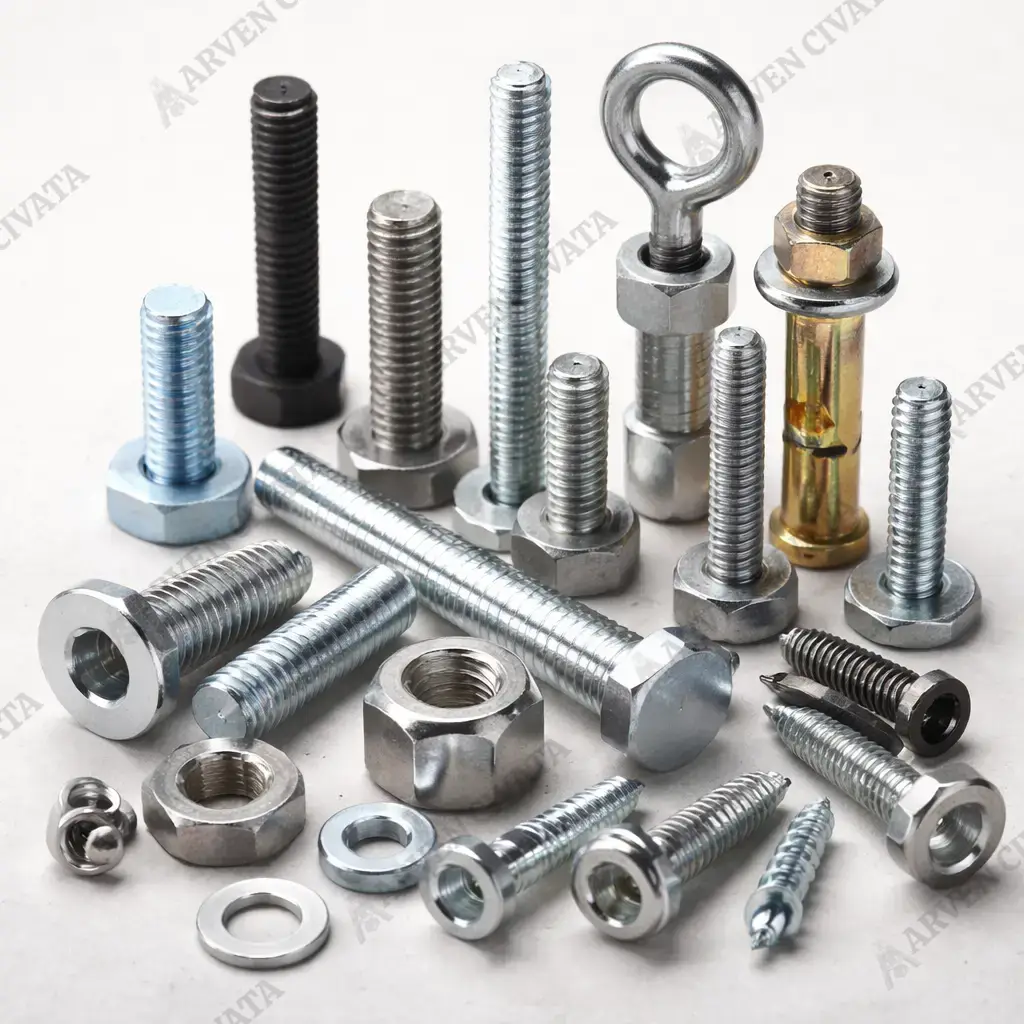
Bolts are produced according to international standards, and one of the most widely used standards is DIN (Deutsches Institut für Normung). DIN standards determine the dimensions, thread structure, tolerances, and mechanical properties of the bolt.
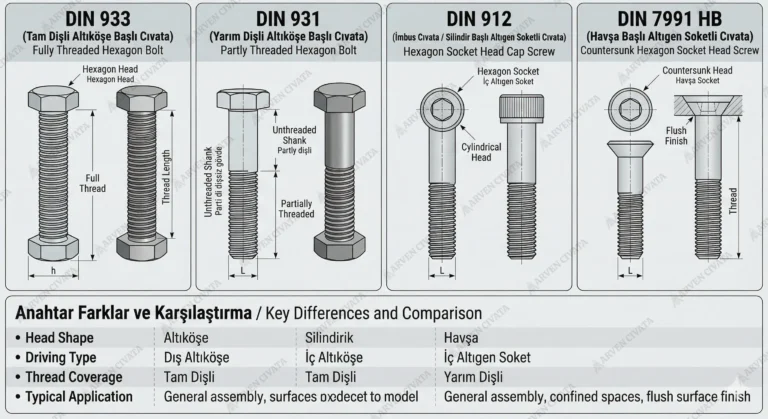
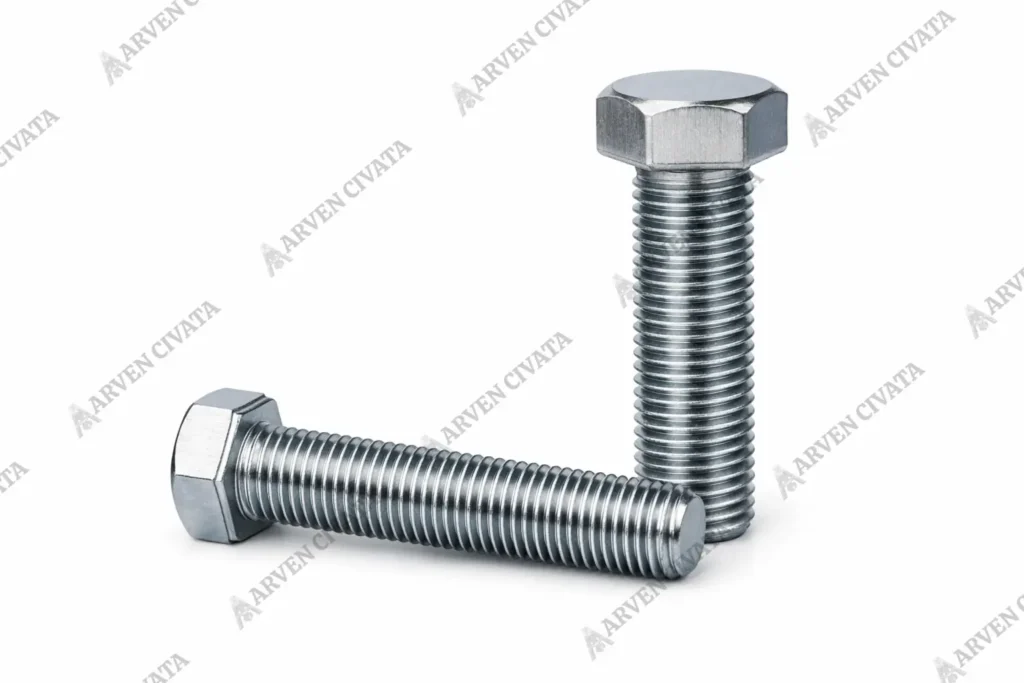
DIN 933 (Fully Threaded Bolt): It is threaded along its entire body. It is used in connections that require high gripping. It provides an advantage in short connections because the entire surface is in contact.
DIN 931 (Partially Threaded Bolt): A part of the body is unthreaded. This makes it more resistant to shear loads. It is preferred in machinery and heavy industry.
DIN 912 (Inbus / Allen Head Bolt): It has a hexagonal socket head. It allows assembly in tight spaces. It is suitable for high tightening torque.
DIN 7991 (Countersunk Socket Head): It sits flush with the surface. It is used in applications that require an aesthetic and flat surface.
Screw Types & Technical Specifications
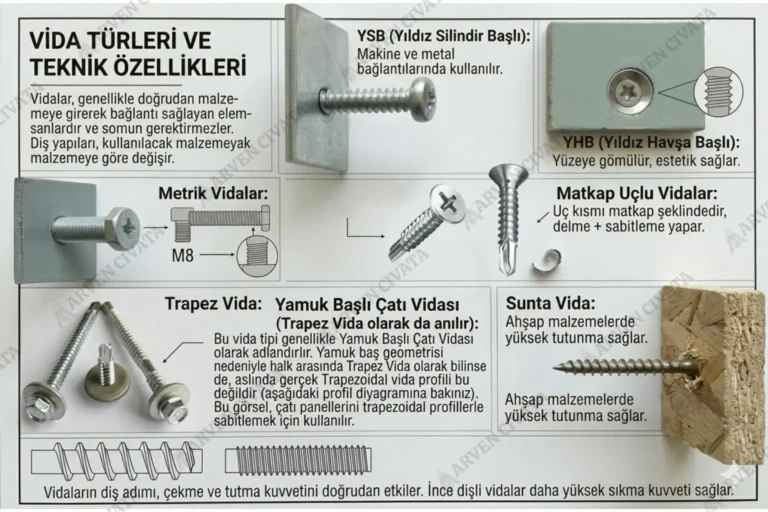
Screws are components that generally provide a connection by driving directly into the material and do not require a nut. Their thread structures vary according to the material to be used.
YSB (Pan Head Phillips): Used in machinery and metal connections.
YHB (Countersunk Head Phillips): Embedded into the surface, provides aesthetics.
Metric Screws: Have standard thread dimensions (M6, M8, etc.).
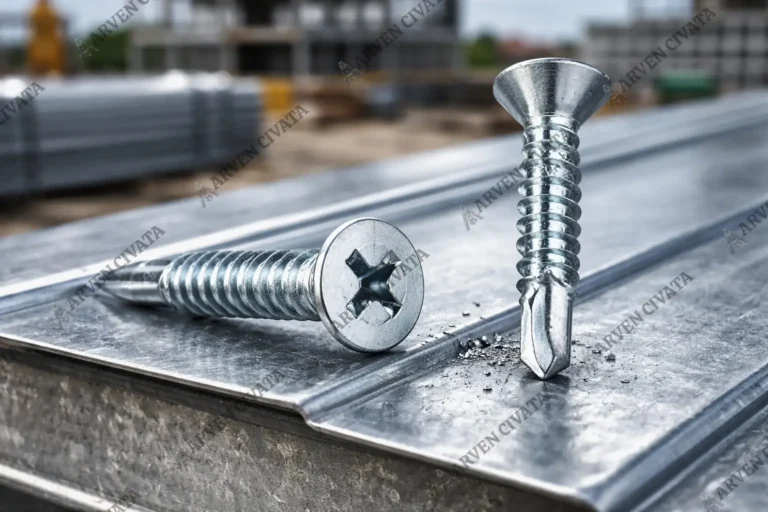
Self-Drilling Screws: The tip is shaped like a drill bit, performs drilling + fixing.
Trapezoidal Screw: Used in power transmission.
Chipboard Screw: Provides high adhesion in wooden materials.
The thread pitch of screws directly affects the pulling and holding force. Fine-threaded screws provide higher tightening force.
Stainless Steel (A2 – A4)
Stainless bolts are preferred because they are resistant to corrosion.
A2 (304): It is for general use. It is resistant to rusting in humid environments.
A4 (316): It contains molybdenum. It is used in seawater, chemical, and acidic environments.
A4 quality is especially preferred in marine and facade applications.
Strength Classes (Property Classes)
Bolts are classified according to their mechanical strength:
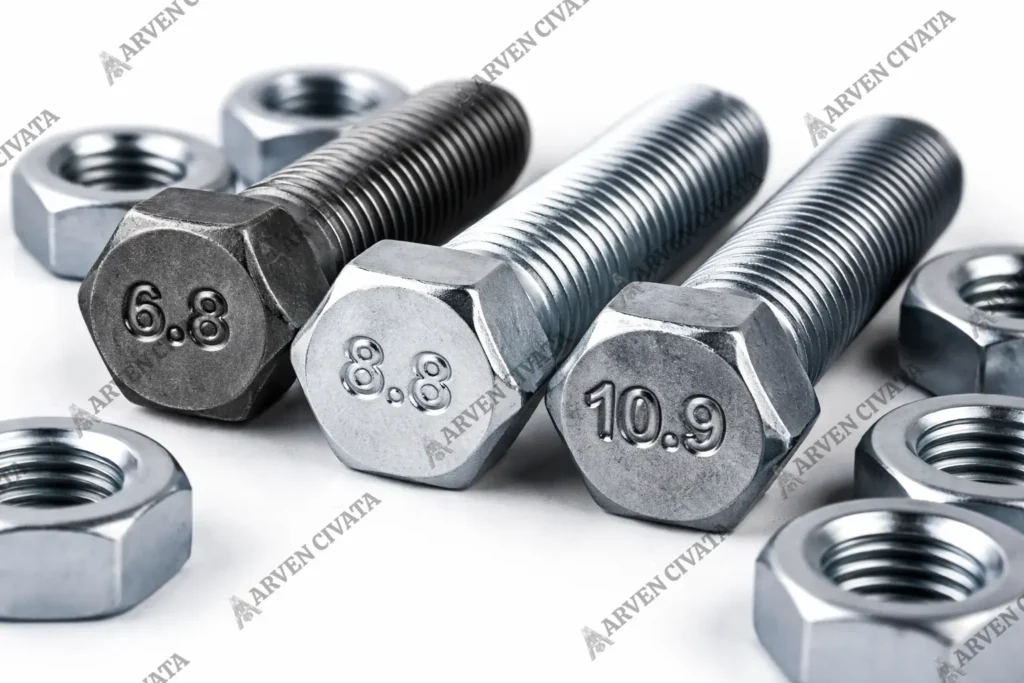
- 6.8: Medium strength
- 8.8: Standard use
- 10.9: High strength
- 12.9: Very high strength
For example, in class 8.8:
- Tensile strength: 800 MPa
- Yield strength: 640 MPa
Coating Types
Kaplama, cıvatanın ömrünü belirler.
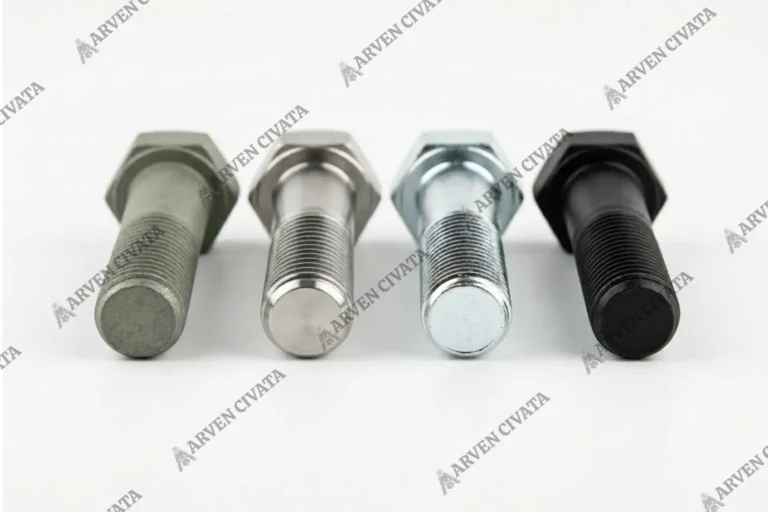
- Geomet: 1000+ hours salt spray test
- Hot-Dip Galvanized: Thick coating, outdoor environments
- Electro Galvanized (White): Indoor use
- Black Bolt: Uncoated
Self-Drilling Screws (Smart Screws)
Smart screws are especially used in steel sheet assembly.
They do not require pre-drilling, saving time.
They reduce labor costs on construction sites.
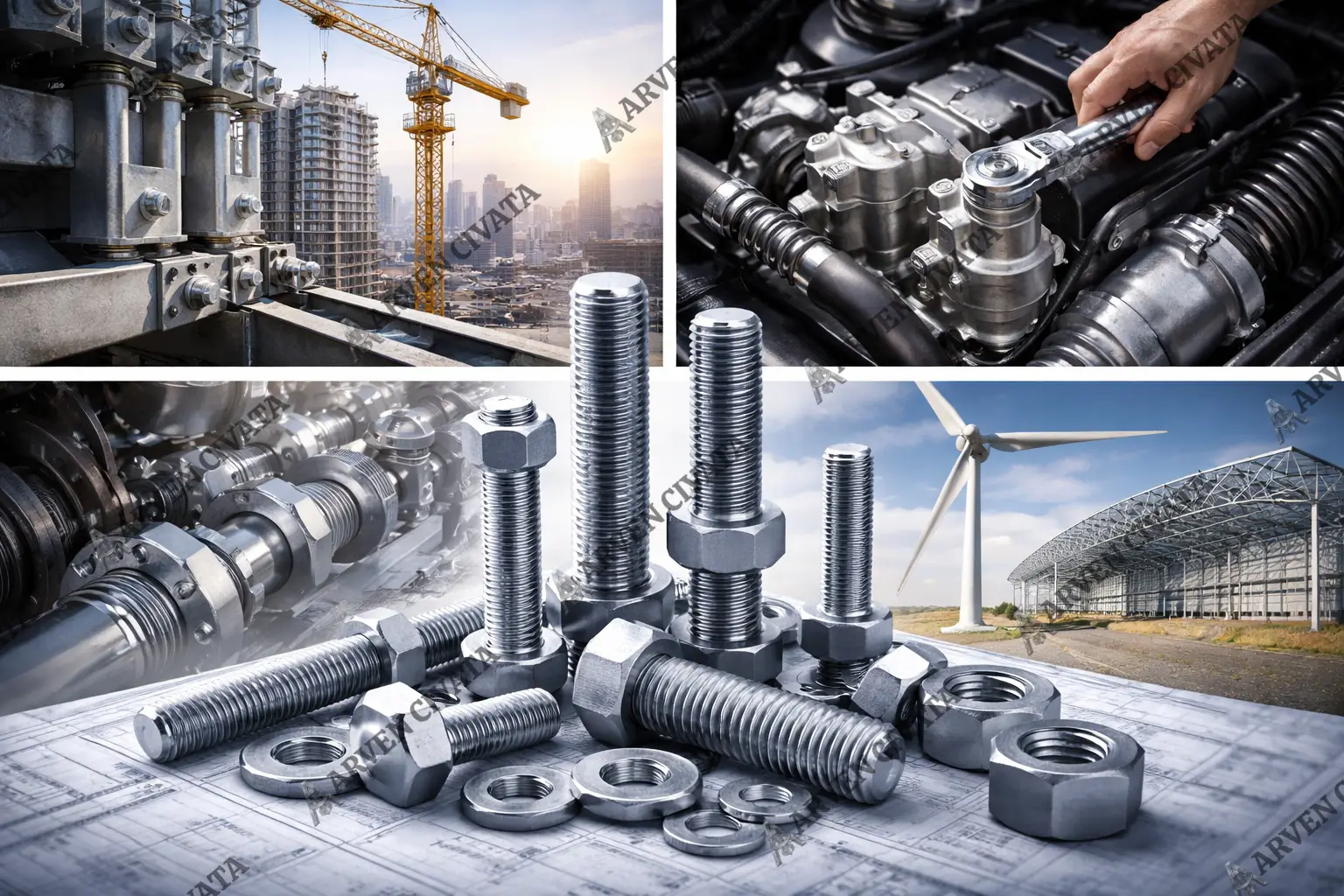
Areas of Application
- Construction: Anchor and load-bearing systems
- Automotive: Engine connections
- Machinery: Moving parts
- Energy: Turbine and tower systems
The Right Selection
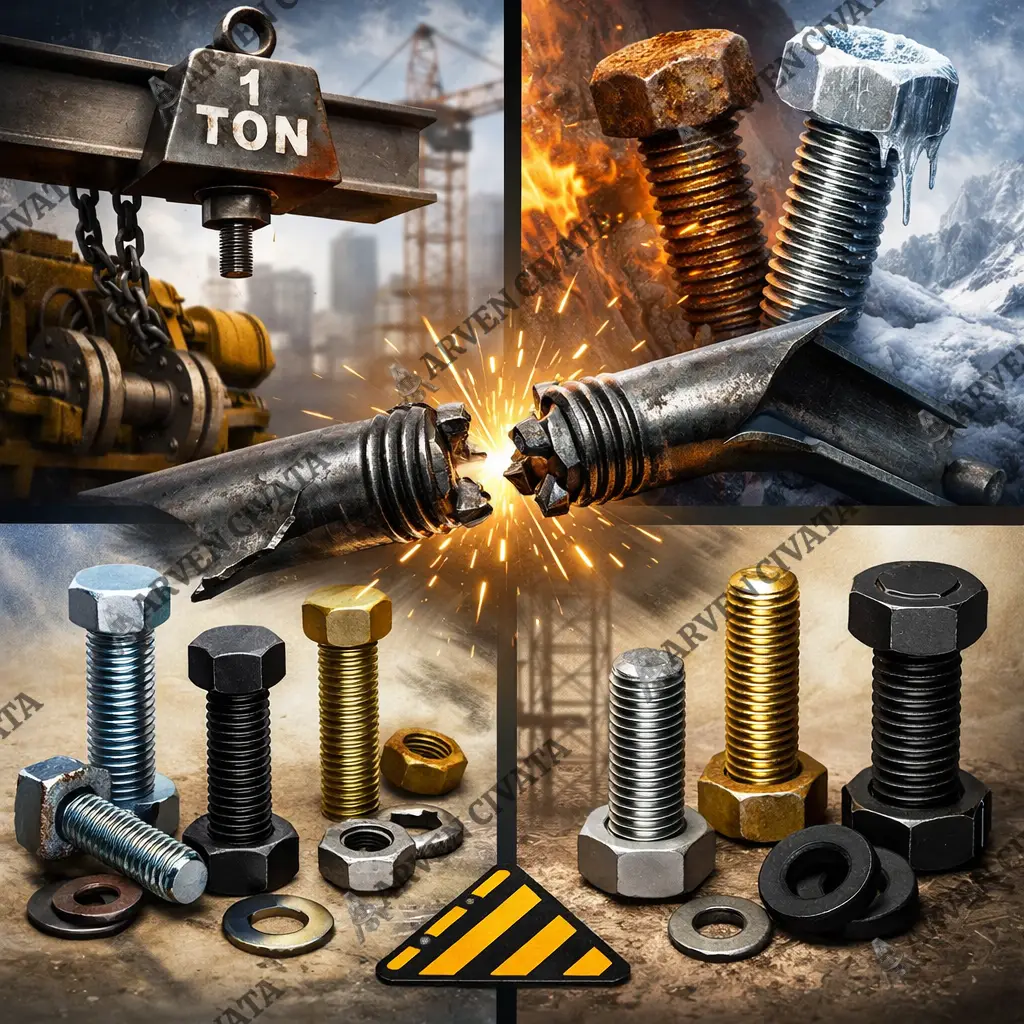
Selection criteria:
- Load type
- Environment
- Coating
- Material
Incorrect selection → risk of breaking
Conclusion
Arven Cıvata supports you in choosing the right product.
It offers the right solution with 17+ years of experience.